





Advanced Technologies for Soil Bioremediation & Monitoring

Efficient, Cost-Effective, and Environmentally Friendly Solutions

Soil contamination threatens both the environment and public health.
Green Soil Consortium
is dedicated to creating effective, economical, and environmentally friendly bioremediation solutions.

Our Core Technologies &
Focus Pollutants

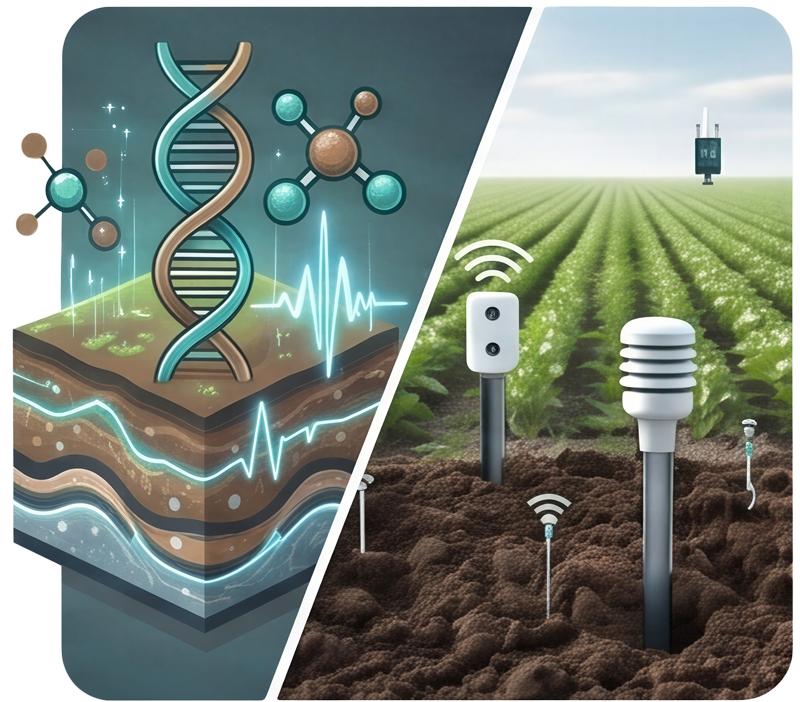
Tailored Biological Treatments

In situ remediation tailored to specific soil and pollutants.

• Oils
• Explosives (HMX, TNT, RDX)
• PFAS (PFOS and PFOA)

encapsulating solutions

Tailor-made encapsulation solutions were developed to improve bacterial viability and delivery to contaminated hot spots.

Advanced Monitoring & Sensing

Real-time monitoring capabilities of target pollutants and soil conditions.

AI-Powered Infrastructure

Integrating advanced biological technologies and artificial intelligence for optimized results.

The Green Soil Mission

Our main goal is to develop biological technologies for Soil and Groundwater remediation of energetic, oil, and PFAS pollutants. We strive for solutions that are not only effective but also economical and environmentally friendly.

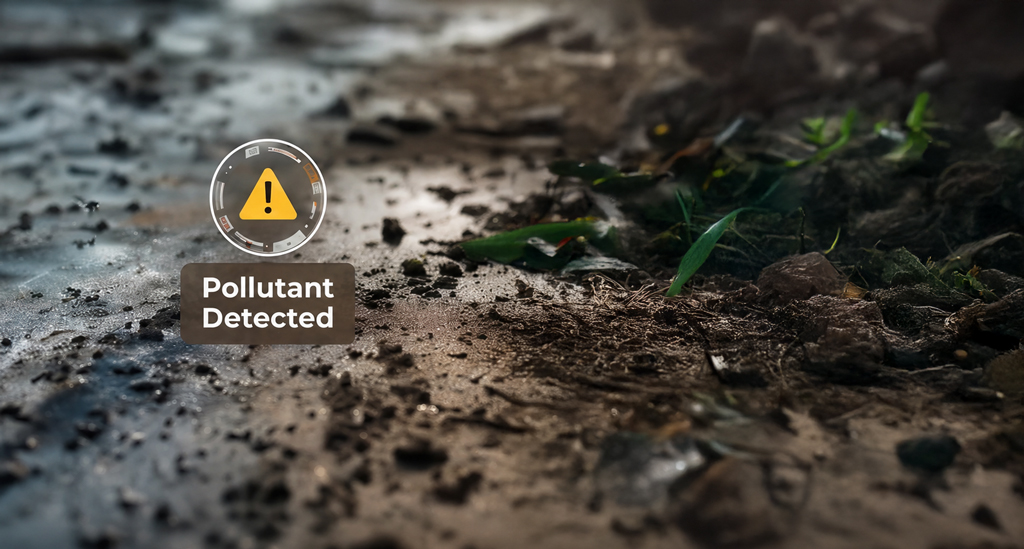
pollutant-detected
clean-soil

Green Soil Working Process

Work group 1

Biological Component

  • Characterize microbial communities across depths in contaminated and uncontaminated soils at selected sites.
  • Identify and characterize a small set of active biological components derived from contaminated soils.
  • Map metabolic networks relevant to contaminant transformation in soil.
  • Establish laboratory experiments to evaluate contaminant remediation capability, including organisms active against energetic compounds (e.g., RDX) and hydrocarbons.
  • Develop microbiological methods to substantially reduce hydrocarbon and energetic contaminants under laboratory conditions, and characterize enzymes involved in hydrocarbon remediation, with accompanying expression strategies.
  • Develop fermentation and production protocols for prioritized biological components and enzyme expression systems.
  • Establish methods to evaluate the toxicity and safety of remediation products.

Work group 2

Stabilization & Soil Application

  • Develop water‑based formulations to increase the radius of influence and improve distribution when deployed via irrigation or similar delivery.
  • Formulate stabilization strategies that substantially increase viability and persistence of active biological materials and activity of cell‑free enzymes in soil environments.
  • Design encapsulation approaches that enhance contaminant uptake and enable targeted release of biological components upon contact with contaminants or relevant environmental cues.
  • Produce formulations that demonstrably increase bioremediation activity and enable creation of static barrier layers to concentrate treatment.
  • Perform initial scale‑up of promising formulations and establish methods for efficient distribution throughout the vadose zone.
  • Develop predictive models to estimate formulation behavior and activity in different soil conditions.

Work group 3

Sensing

  • Develop capabilities for processing, transporting, and managing soil‑extracted fluids to interface with sensor arrays.
  • Develop field‑ready microbial sensors tailored to specific target contaminants and site‑integrative microbial reporting systems.
  • Develop engineered microbial consortia for detection and reporting of contamination levels.
  • Develop field‑deployable optical (including SERS/photoluminescence), electrochemical, and QCM‑based sensing technologies for analysis of soil extracts.
  • Advance geoelectrical and near/remote optical methods for subsurface contaminant characterization.
  • Integrate biological, electrochemical, and optical sensing modalities into unified measurement workflows.
  • Define systems for data collection, cloud upload, and analytics, and deliver a laboratory prototype demonstrator that combines physical and biological sensors for measuring target materials in soil samples.